Lice Prevention Workshop
Knowledge, Prevention, Peace of Mind
A one‑hour workshop teaching parents and caregivers how to treat and prevent lice effectively, safely, and affordably.
The Problem
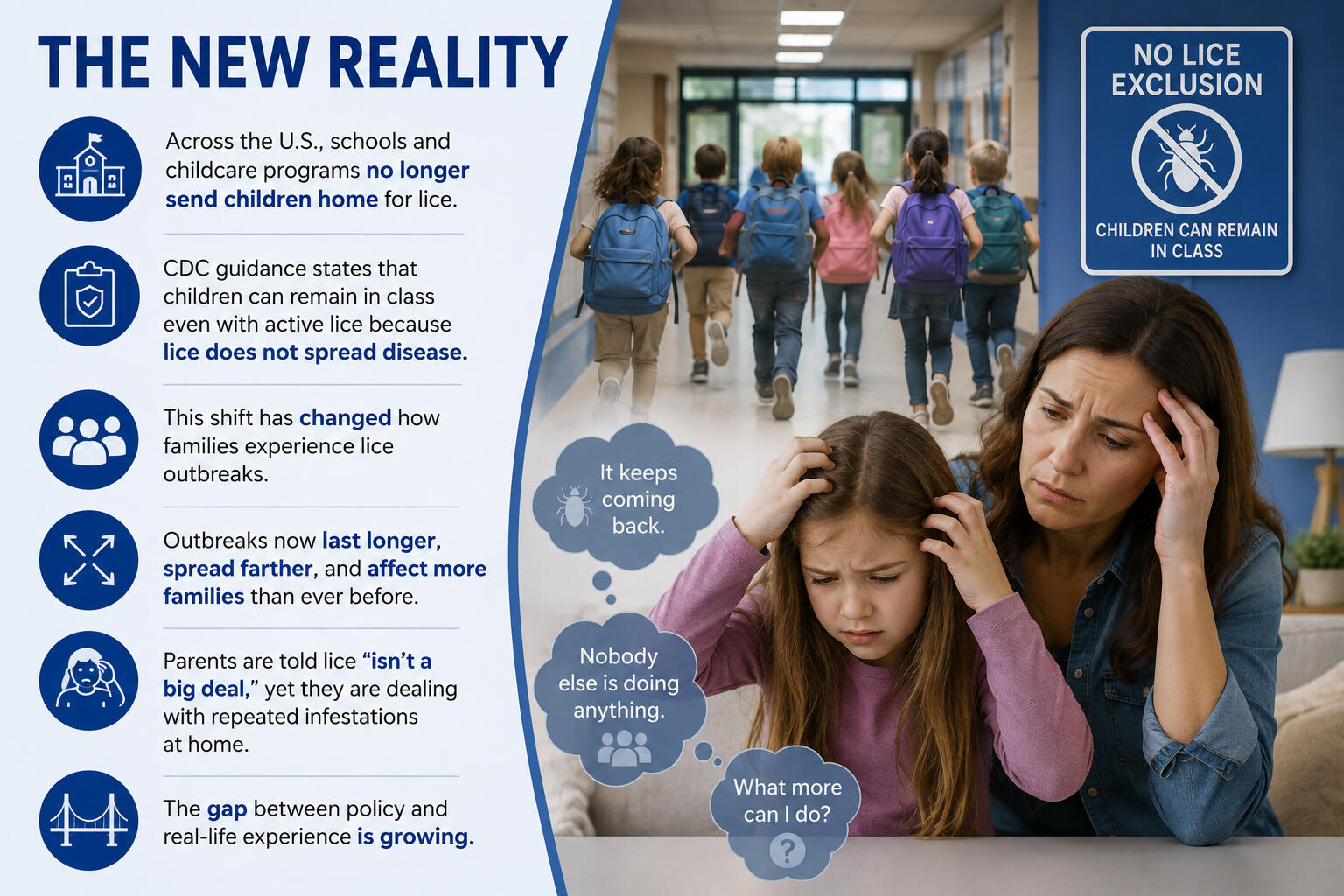
The New Reality
Across the U.S., schools and childcare programs no longer send children home for lice.CDC guidance states that children can remain in class even with active lice because lice does not spread disease.This shift has changed how families experience lice outbreaks.
Outbreaks now last longer, spread farther, and affect more families than ever before.Parents are told lice “isn’t a big deal,” yet they are dealing with repeated infestations at home.The gap between policy and real‑life experience is growing
Why Families Are Struggling
Most people were never taught how lice actually works.
They were given products, panic, and conflicting advice — not accurate information.
Parents are left trying to manage lice with:
- outdated school policies
- inconsistent guidance
- fear‑based marketing
- chemical‑heavy products
- myths about spread and reinfestation
This creates confusion, frustration, and unnecessary stress.
The Industry Problem
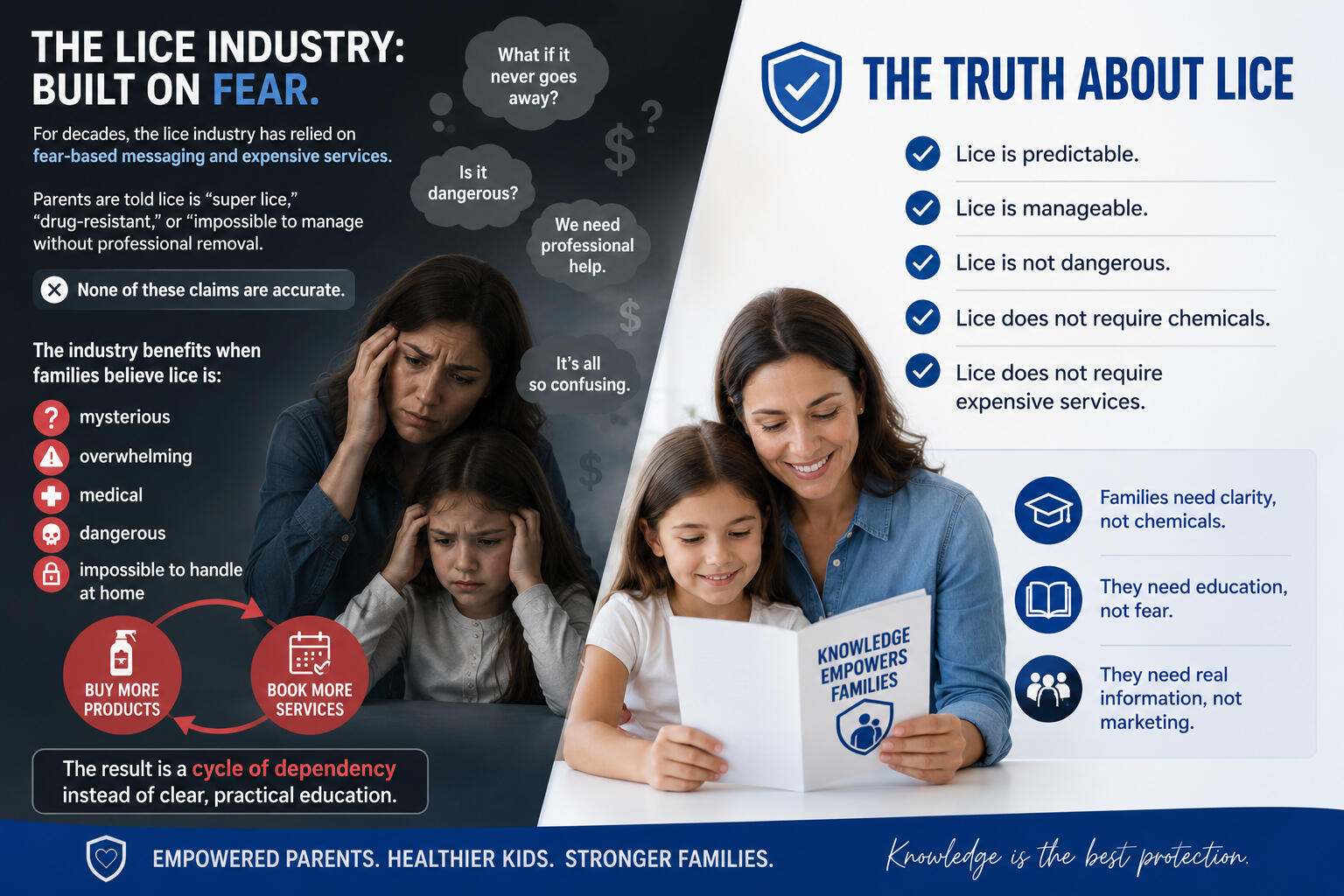
For decades, the lice industry has relied on fear-based messaging and expensive services.
Parents are told lice is “super lice,” “drug‑resistant,” or “impossible to manage without professional removal.”
None of these claims are accurate.
The industry benefits when families believe lice is:
- mysterious
- overwhelming
- medical
- dangerous
- impossible to handle at home
When parents feel confused or afraid, they buy more products and book more services.
The result is a cycle of dependency instead of clear, practical education.
The Truth About Lice
- Lice is predictable.
- Lice is manageable.
- Lice is not dangerous.
- Lice does not require chemicals.
- Lice does not require expensive services.
Families need clarity, not chemicals.
They need education, not fear.
They need real information, not marketing.
Workshop Overview
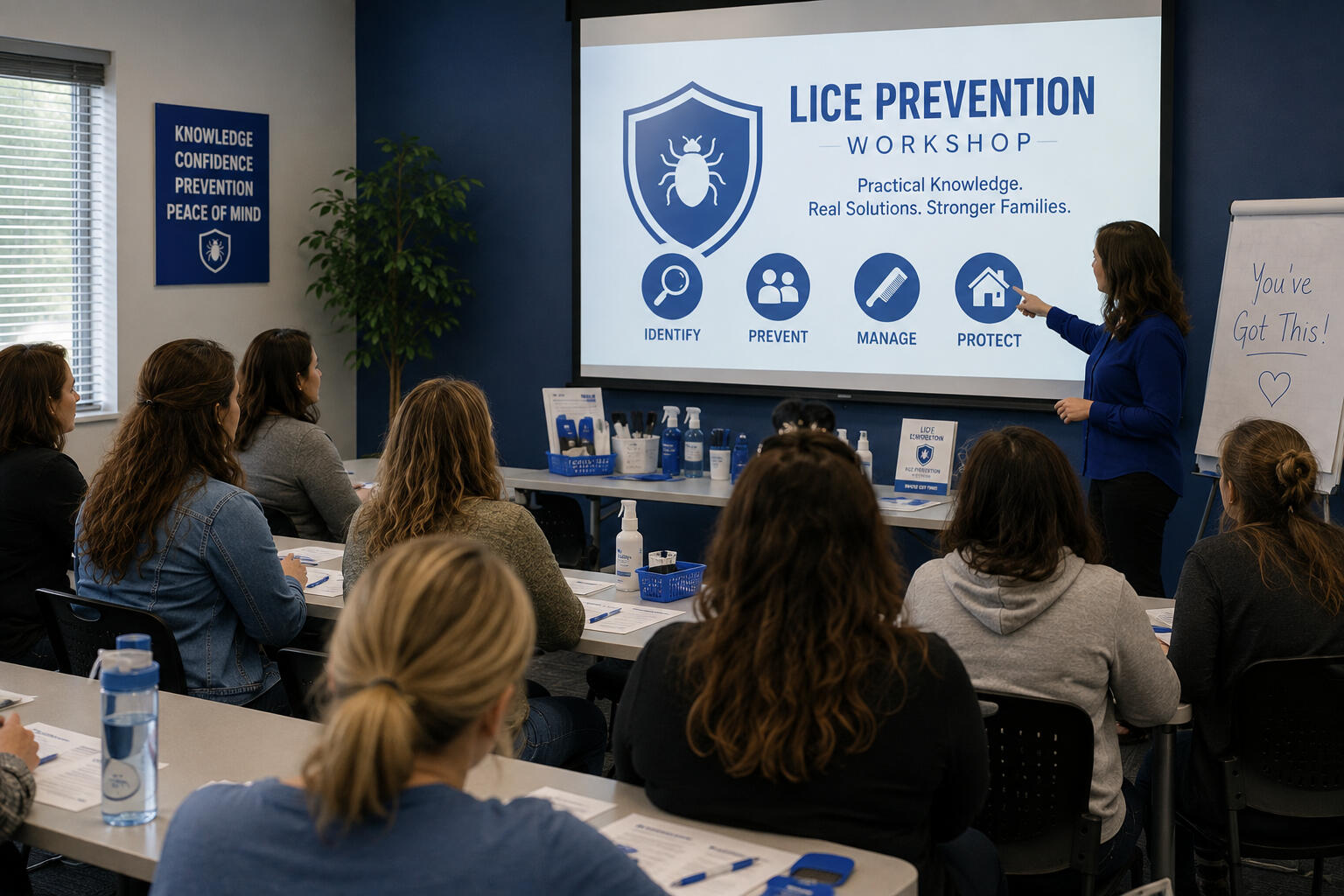
Workshop Overview
Why This Class Exists
Because parents deserve to understand lice correctly.
Because schools need calm, accurate guidance.
Because families need tools that work in real environmentsWhat You Will Learn
This workshop is a one‑hour class that teaches parents and caregivers how lice actually works — not the myths, not the fear‑based marketing, and not the outdated advice. You will learn the real biology, the real behavior, the hands‑on techniques, and the prevention methods that keep lice from becoming a recurring issue.Lice Biology and Life Cycle
You will learn how lice develop from egg to adult, how long each stage lasts, and why understanding the life cycle is the key to preventing reinfestation. This includes how nits attach, when they hatch, and how lice survive in real environments.How Lice Spreads (and Doesn’t Spread)
You will learn the actual conditions lice need to transfer from one person to another. This section corrects common myths about bedding, furniture, pets, and classrooms so you know what truly matters and what doesn’t.Correct Identification
You will learn how to identify lice and nits accurately, including:
- what nits look like
- where they attach
- how to distinguish nits from dandruff or debris
- how to check children calmly and correctly
This section removes the guesswork and panic from identification.Comb‑Out and Sectioning Techniques
You will learn how to section hair correctly for lice checks and comb‑outs, including:
- how to divide the scalp into manageable sections
- how to work through each section methodically
- how to use a lice comb effectively
- how to maintain calm, consistent technique without rushing
This is taught as a practical, repeatable process that parents and caregivers can use at home.Non‑Toxic Management
You will learn how to manage lice without chemicals, without panic, and without expensive treatments. This includes calm, practical routines that work in real homes and childcare settings, aligned with the comb‑out and sectioning methods taught in class.Preventive Measures at Home
You will learn simple, effective prevention routines for households, including:
- daily habits that reduce risk
- how to handle shared items
- how to respond when a classmate or sibling has lice
- how to communicate with other caregivers without panic
These measures are designed to be realistic and sustainable, not extreme or fear‑based.Classroom and Group Preventive Measures
You will learn prevention strategies for classrooms, daycares, and group environments, including:
- how to reduce spread in shared spaces
- how to handle group activities and seating
- how to communicate with parents and staff calmly and clearly
- how to set expectations without shaming families or frightening children
This section is especially important for teachers, school staff, and childcare workers.Stopping Reinfestation Cycles
You will learn how reinfestation happens, why it happens, and how to stop it. This section explains the timing, behaviors, and misunderstandings that cause repeated outbreaks — and how to break that cycle.Group Requirements
This class is offered only to groups of 10–20 attendees. Schools with high turnout can redistribute parents into multiple sessions to keep each group within the required range.Bonus Kit
Every attendee receives a small take‑home kit that supports the non‑toxic methods taught in the class, including the routines and techniques covered in comb‑out, sectioning, and prevention.
Scheduling
Request a Workshop
This class is available only to groups of 10–20 attendees.
Individual bookings are not accepted.Pricing
The workshop is $30 per person.
Each session requires a minimum of 10 attendees and can accommodate up to 20.
Schools or organizations with more than 20 parents may schedule multiple back‑to‑back sessions.
Each session is billed per person at the same rate.Current Region
Workshops are currently available in East Texas.
Nearby areas may request scheduling if they have a group of 10–20 attendees.
New regions will be announced on the Announcements page as demand forms.Who Can Request a Workshop
- schools
- daycares
- churches
- community centers
- mom groups
- foster networks
- childcare programs
- PTO/PTA groups
- parent organizationsWhat Happens After You Submit
You will receive a follow‑up message to confirm:
- your group size
- your location
- your preferred date range
- whether multiple sessions are needed
- any special considerations for your facility or groupOnce confirmed, your workshop will be scheduled based on current regional availability.
Frequently Asked Questions
What is the purpose of this workshop?
The purpose of this workshop is to provide clear, evidence-based education about head lice so caregivers can make informed decisions with confidence. Participants will learn how lice spread, how to identify them, common myths and misconceptions, prevention strategies, and the strengths and limitations of different management approaches. The focus is on education, not fear, sales, or product promotion.
Who is this workshop for?
This workshop is designed for parents, guardians, grandparents, teachers, childcare providers, school staff, youth leaders, and anyone responsible for the care of children. Whether you are dealing with a current lice concern or simply want to be prepared, the workshop provides practical, easy-to-understand information to help you respond with confidence.
What will I learn?
Participants will learn how head lice spread, how to identify lice and nits, common myths and misconceptions, practical prevention strategies, and how to evaluate information and treatment options with confidence. The workshop is designed to replace fear and confusion with clear, evidence-based knowledge that caregivers can use in real-world situations.
Are you selling lice products?
No. This workshop is educational and does not sell lice products, treatments, or equipment. While examples of products and tools may be discussed, they are presented for educational purposes only. The focus is on helping caregivers understand their options so they can make informed decisions based on knowledge rather than marketing.
Are you affiliated with any lice treatment companies?
No. I am not affiliated with, sponsored by, or compensated by any lice treatment company. This workshop is independent and focused solely on providing caregivers with unbiased, evidence-based education. Any products or tools discussed are presented as examples to support learning, not as endorsements.
Do you provide lice removal services?
No. I do not provide hands-on lice removal services. My focus is solely on educating caregivers about head lice so they can understand what they’re dealing with and confidently handle it themselves.
Do you offer virtual workshops?
Not at this time. My workshops are currently offered in person because I believe a hands-on, interactive environment provides a more productive and effective learning experience for caregivers.That said, virtual workshops may be a possibility in the future as I continue to expand my educational offerings.
What makes this workshop different from information found online?
There is a lot of information about head lice online—but finding accurate, practical information and knowing what to actually do with it can be overwhelming.This workshop brings the information together in one place and focuses on understanding, not just treating. Caregivers have the opportunity to learn in an interactive, hands-on environment, ask questions, work through real-world situations, and gain the confidence to make informed decisions when lice show up.Rather than sending you home with another list of things to search for, this workshop is designed to help you understand the why behind what you’re doing—and how to apply that knowledge in real life.
Why is lice education important?
Because head lice are often surrounded by fear, embarrassment, misinformation, and unnecessary stress.When caregivers understand what lice are, how they spread, how to recognize them, and what steps actually matter, they can respond calmly and confidently instead of relying on myths or overwhelming themselves with unnecessary measures.Lice education also helps caregivers know what to look for, make informed decisions about treatment, and reduce the chance of common mistakes that can make an already stressful situation even more frustrating.Knowledge turns a stressful situation into one you can handle.
Can pets spread head lice?
No. Head lice are human-specific parasites and do not live on or infest pets. Your dog, cat, or other household pets cannot catch or spread human head lice.If someone in your household has head lice, there is no need to treat your pets for head lice. The focus should remain on the affected person and the appropriate steps for managing the infestation.
Stay Connected
We’re taking lice education on the road!
Keep up with our journey as we travel across the country bringing practical, hands-on lice education to caregivers and communities.Follow along for upcoming workshop locations, regional announcements, events, educational tips, and updates from the road. You’ll know where we’re headed next—and when we may be coming to a community near you.Follow the journey. Learn along the way. Know when we’re coming your way.